





Forevermark India’s MD tells IMAGES Business of Fashion’s Kajal Ahuja, that the immediate focus is on building scale without losing sight of the distinctive experience that brought the brand into jewellery retail in the first place…
Diamonds are forever, and for Forevermark and De Beers Group, diamonds are at the very centre of the brand’s origin story. One year after opening their first exclusive boutique in India, the Group is taking this glittering legacy a step further. Forevermark Diamond Jewellery is preparing for its next phase of growth, with an ambitious plan to build a 100-store network and achieve $100 million in revenue by 2030.
Launched in India in September 2025, the Forevermark’s retail journey is guided by an India-first strategy: establish a strong consumer proposition at home before taking the model to global markets. Managing Director, Mallikarjuna Reddy Yarabolu tells IMAGES Business of Fashion’s Kajal Ahuja, the immediate focus is on building scale without losing sight of the distinctive experience that brought the brand into jewellery retail in the first place.
Mallikarjuna Reddy Yarabolu says the aim is to build a differentiated offering for consumers and then scale it. “Our strategy is India first, then the world. We will firm it up in India with 100 stores and Rs 1,000 crore, in the next five years, by 2030, and then possibly move to the world,” he says.
From Ingredient Brand to Jeweller
Part of the 135-year-old natural diamond company De Beers Group, for a long time Forevermark Diamond Jewellery existed as a diamond ingredient brand. The company had been supplying Forevermark diamonds to most jewellers in India – who then converted them into stunning piece – before launching an exclusive brand outlet (EBO) in India in September 2025. By the end of the first month, the brand had sold over 900 pieces at a conversion rate of almost 30%, with an average price point of about $4,000-5,000.
Yarabolu says the Indian experience so far has been “extremely satisfactory”.
“Consumers now appreciate our solitaires and our collections purely from the standpoint of craftsmanship, design, apart from of course, the highest quality of diamond, which is really encouraging,” Yarabolu said.
Expansion Plan: 13-14 Stores Now, 30 by 2027
Having established a promising response to its direct-to-consumer jewellery offering, Forevermark is now turning its attention to building a wider retail presence across India, with a clear roadmap for expansion and a carefully calibrated store model.
The brand will have 13-14 operational stores in India by the end of December, with another 15 planned next year. It expects to reach about 30 stores by the end of December 2027 and to add another 70 over the following three years.
Expansion is focused on metro cities and extended metros, including Patna, Chandigarh and Mangalore, where it is already present. Over the next four to five years, Forevermark will concentrate on the 20 cities that drive the country. “Consumption, whether offline or online, is highly significant from these cities,” says Yarabolu.
Two thirds of this expansion will be franchise-led, leaning on partners, while COCO stores will only account for one third of the total number.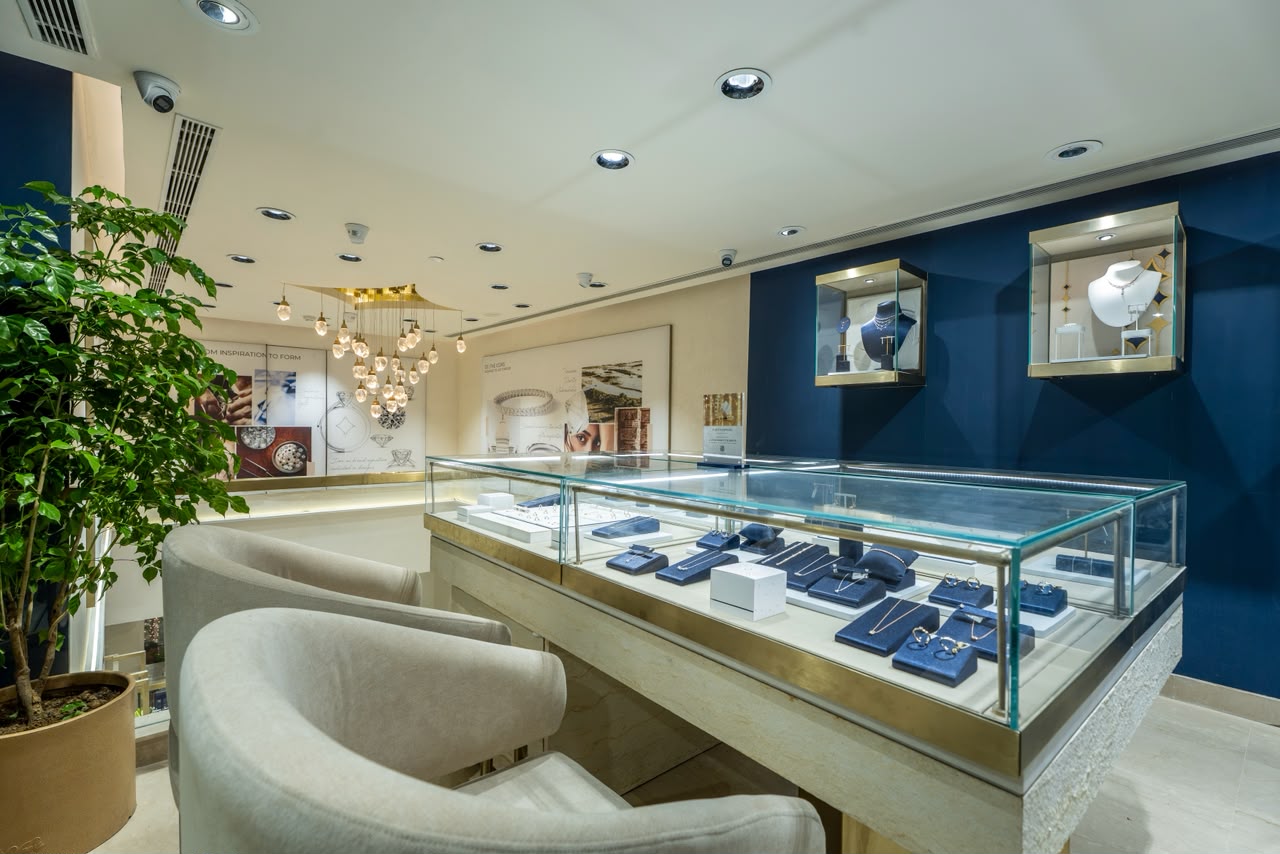
Outside of the two flagship stores, Forevermark is keeping its footprint compact. The brand has two large stores of over 3,500 sq ft, one in Khar, Mumbai, and one in southeast Delhi. The rest fall into two size bands: 850-900 sq ft and 550-750 sq ft.
“That’s the right size for our stores because we are pure-play natural diamonds and we want to stick to this role. We decided that the stores have to be commercially tight without compromising the experience for the consumer,” said Yarabolu.
Festive & Wedding Season Push
The brand, which had a phenomenal October, is now looking forward to a stunning next four months, what with the wedding season being underway.
While bridal jewellery is not its core offering, Forevermark does cater to the wedding party’s inner circle. To market its wedding collection, Forevermark has introduced price-led offerings this season including 1-carat solitaires starting at Rs 6.5 lakh and going up to Rs 12.5 lakh, and 1-carat rings priced at between Rs 3.49 lakh and Rs 6.5 lakh – this is approximately 50% of the market price.
Rings are the largest-selling category so far. “Since we are known for natural diamonds, the solitaires really glow,” Yarabolu states.
As the brand builds on this seasonal momentum, its early customer profile is also revealing an interesting shift in who is buying diamond jewellery – and how those purchase decisions are being made.
“Early customer data points to a younger buyer who shops at Forevermark. Almost 40% of the buyers are under 35. Purchases are rarely solo. We have not seen a single person walk in and buy jewellery alone. It’s usually a couple, probably accompanied by a mother, a mother-in-law, a sister, or a brother, just to say, ‘You look good in this piece of jewellery,’ to give that reassurance that you’re making the right decision,” says Yarabolu.
Digital as the “3 A.M. Friend”
The shift from a younger, group-led buying pattern to a more considered purchase journey is also shaping how Forevermark approaches digital – as an extension of the in-store experience, rather than a substitute for it.
“Online, the brand wants to support the offline experience rather than replace it. We want to be the customer’s 3 a.m. friend,” Yarabolu explains, referring to consumers who browse late at night before making a decision. “Once they firm up on what they want to buy, we encourage them to come into a physical store, because we firmly believe that the product they’re buying should be requires touch and feel.”
Their presence on marketplaces is for now at an early stage, with a pilot running on Tata CliQ. Yarabolu says for now Forevermark is seeing decent traction on Tata CliQ.
The brand’s emphasis on a seamless online-to-offline journey is matched by a sharply localised approach to marketing – Princess Gauri Kumari is the face of the brand until March 2027 – with campaigns designed to build awareness in the markets where its stores are already present.
At present, Forevermark is concentrating marketing spend where it has stores rather than spreading itself thin. “For example, in Mumbai we don’t go advertise across the city. We only concentrate our marketing efforts – whether print, hoardings, influencers, or social media – in the areas where we are present, like Bandra, Khar, Chembur, and Borivali, so as to capitalise on consumer awareness, which proves to be far higher.”
To distinguish itself in a crowded jewellery market, Forevermark is keeping its creative approach understated, with uncluttered messaging that builds on the brand’s original theme of self-celebration. The focus is also on reinforcing its association with the De Beers Group and the values it represents. “We want to build on the trust that’s already present and ensure that Forevermark Diamond Jewellery is seen as belonging to the De Beers Group. We share the same values when it comes to rarity, craftsmanship, design aesthetics and manufacturing quality, and we will continue to invest in these,” Yarabolu states.
The Future, Naturally
Looking ahead, Yarabolu defines success for Forevermark in three parts. “First, when the consumer walks out of our store feeling very delighted despite not buying, that’s the significance of the experience we want to continue,” he says, “followed by repeat purchase, and then scale.”
“For us, achieving 100 stores and a turnover of $100 million within the next five years would mark a significant milestone. We are firmly committed to this ambition, but beyond the numbers, what we really want to see is natural diamonds becoming a more integral part of consumers’ lives,” Yarabolu concludes.