





Bombae did not start out trying to be a lifestyle brand. It started out trying to fix one specific, universally dreaded experience: hair removal for women in India.
While women in the rest of the world had already made peace with shaving or other hair removal methods, Indian women only seemed to confront the problem when Covid hit and salons shut down. Urban women, in particular, realised they needed a solution and switched to razors or trimmers out of necessity. That is when Bombae was founded: for women, by women.
Four years on, the Bombay Shaving Company-backed label is recasting itself around a bigger idea: ‘hair expression.’ The company is betting that the same instinct which built its razor and trimmer business can now carry it into styling, skincare, and eventually, offline retail at scale.
In an exclusive conversation with IMAGES Business of Fashion, Siddha Jain, Co-Founder and Chief Business Officer, Bombae, discusses how the brand’s core vision has evolved over the years, its growth drivers, retail expansion plans, and more…
Not Just a Hair Removal Brand
Launched in 2022, Bombae started with hair removal products — wax strips, razors, trimmers — and has since expanded into a lifestyle brand, adding hair styling tools, fragrance, and skincare to its portfolio.
Siddha explains that the core thesis of Bombae has always been to build a limitless world for women. “Our core thesis when we started was that we wanted to own the most painful part of coming of age — something that recurs long-term — which is hair removal,” she says.
“The earliest experiences of removing hair are always associated with something negative in a woman’s life. It is always tied to anxiety and pain. The idea was to make that experience smooth. People associate the word ‘smooth’ with how the body feels, but we wanted to make the entire experience smooth for women,” Siddha explains.
Having addressed the pain and judgement associated with hair removal, Bombae is now expanding its vision through ‘hair expression.’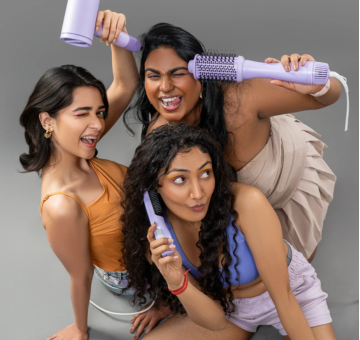
“A huge part of self-expression is the hair on a woman’s head,” says Siddha. “The journey toward getting the kind of hair you love shouldn’t carry the same tax of going to a salon.”
Siddha explains that Bombae wants to strip validation of its external dependence when it comes to hair expression, removing the fuss of outside approval and giving women the agency to look and feel a certain way on their own terms.
“Our role is a small enablement — in five, ten minutes, can we make her feel a little more in control, a little more limitless toward the world out there. That’s the broad thesis,” she says. “We’ve gone from hair removal to hair expression. From ‘smooth AF’ as a core brand thought, to a celebration of limitlessness in women.”
This philosophy underpins Bombae’s tagline: celebrating the “Born Basharam” self — besharam meaning shame-free. “There’s a nuance here,” Siddha clarifies. “It’s not about being shameless but about being shame-free. That distinction is the whole idea.”
Staying Sharp in a Crowded Market
The personal care space is crowded and undergoing a major shift. Within that landscape, how does Bombae ensure the brand doesn’t get diluted as it expands into other categories? We asked Siddha Jain.
“We are very clear on the core thesis of our brand, which is hair expression, alongside enabling people to live better lives through the right devices, held to the highest standards,” she explains.
Bombae’s strategy is to build a pre- and post-ritual around its core category by expanding into adjacent ones. “In hair removal, the common ritual is: cleanse, trim, and soothe afterward. Then you might put on perfume,” she says, illustrating how each new category is designed to extend a single, connected routine rather than exist as a standalone product line.
“The idea is that across any category or price point, if X is what the mass-market player is offering, how do we provide at least 1.2 to 1.3 times that value to the consumer: through product experience, through touch and feel, and through the core of the product itself. That is how we try to maintain it,” Siddha adds.
Product Innovation
While the brand is not looking to expand into new categories anytime soon, it is currently focused on consolidating and going deeper into its existing ones — with a strong bent toward India-first innovation.
“Take our four categories — trimming, styling, and so on. Can we push the boundaries of innovation in ways no one has seen? We are not interested in superficial innovation — like changing the strip on a razor. We want innovation that meaningfully changes the experience,” she explains.
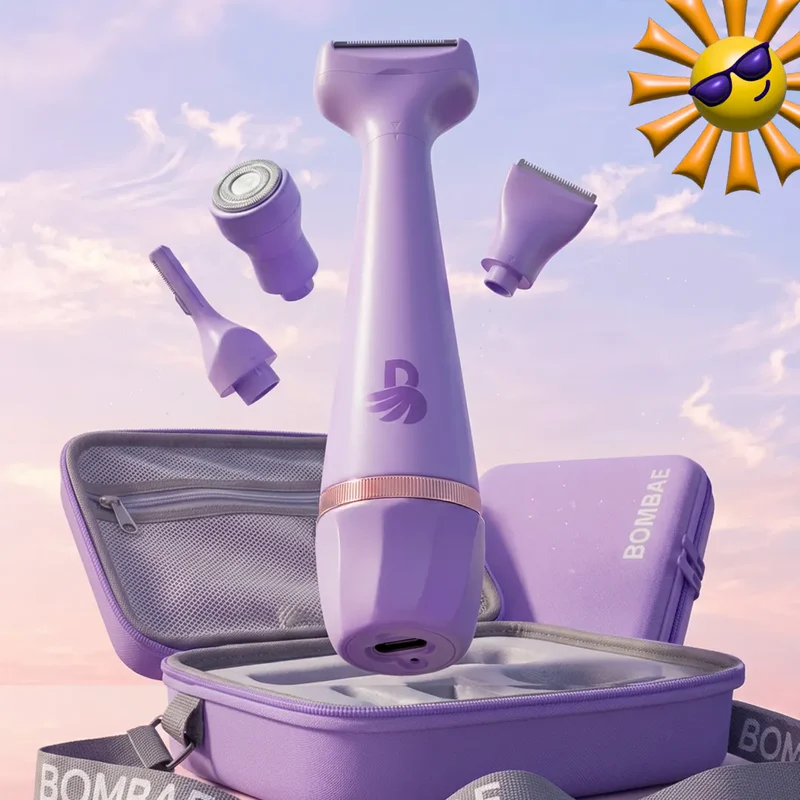 She cites an example: “We spent two years developing a razor with a roller built in. It is the difference between walking and standing on a travelator. The travelator is 2x faster, 2x smoother. Across multiple consumer tests, the razor scored 2x on every metric. That’s the kind of innovation we want to keep pushing.”
On the manufacturing and R&D front, Siddha shares that the bulk of Bombae’s work is rooted in India. “R&D is centred in India, and 60-70% of our products have started to be made in India as well. A lot of the thinking behind the product including the devices, the design, always originates here.”
That said, the brand continues to draw on specialised partners across Asia. “We have partners across Vietnam, China, and Korea. Depending on the specialisation required — certain ingredient expertise or blade technology — some of that is only available in specific parts of the globe. So we leverage global partners for that,” she explains.
Siddha adds that this drive comes from a larger belief: that women in India still endure a great deal of unnecessary pain. “The way we define it is — can we reduce the share of pain in a consumer’s life? That’s our ultimate measure of market share.”
Bombae’s Growth Drivers
Currently, trimmers drive the most growth and revenue at Bombae. “It’s our biggest category both in size and profitability. Going forward, we believe hair styling will be the next big growth driver for us,” Siddha pointed out.
In terms of revenue, Bombae’s current ARR stands at Rs 120-150 crore, with a target of achieving Rs 200 crores. Within the larger Bombay Shaving Company portfolio, Bombae currently accounts for 25-30% of overall revenue.
“That’s the idea, by design. Our products are heavily over-indexed on devices, so we don’t want consumers to keep buying the same product repeatedly,” Siddha says, further explaining, “But we do want them to return and experience other touchpoints of Bombae. So it’s healthy, double-digit growth across categories.”
Revenue Split: Online vs Offline
Currently, Bombae draws the majority of its revenue from online channels, i.e., 60-70% of its overall revenue.
Siddha notes that Bombae’s consumption patterns largely mirror broader e-commerce trends in India. “A lot of our growth comes from the south, the west, and pockets of the big cities in the north. Broadly, wherever there’s a strong migrant or immigrant population within India, that’s a good proxy for where we see strong consumption,” she explains.
Offline Expansion: Building Landmark Stores
Bombae is preparing for a significant push into offline retail through exclusive brand outlets. “You’ll see a lot of exclusive brand outlets from us over the years, and we are trying to do something quite unique,” Siddha says. “We want our stores to become landmarks in the spaces they occupy — designed well enough to become case studies for what great offline retail can look like.”
She adds that the brand plans to open five to ten exclusive stores over the next year, across key cities. “From a geography standpoint, we want to index meaningfully in the south and west, along with all the metro and tier-1 cities. The exact number of outlets may evolve, but the idea is to slowly build a network across store formats with more experiential stores in the metros.”
Distribution: Going Deep Across Channels
On distribution, Siddha describes Bombae as an omnichannel brand with a strong offline footprint already in place. “We have distribution across all major online retailers, quick commerce, and in modern trade, we’re present in Reliance, DMart, Vijay Sales, and Apollo. We’ll also be available in Reliance Digital stores and general trade. Across all our products, we’d have close to a 30,000-40,000-store footprint.”
Educating the Category
Hair removal and grooming remain under-discussed categories in India, especially for women. Asked how Bombae is working to normalise the conversation, Siddha outlines a multi-pronged approach.
“The best way to educate is to let your community speak for you,” she says.
Bombae runs an always-on community programme addressing myths and misconceptions — from razor versus wax outcomes to common misunderstandings about hair growth.
Beyond that, the brand runs its own owned-channel education, campus ambassador programmes for grassroots outreach, and is exploring AI-driven personalisation to improve education on its website. There are also new formats in the pipeline, Siddha shares.
“The idea is to enable education at every touchpoint — whether someone discovers us on Instagram or YouTube, searches for hacks, or is navigating a first-time hair removal occasion, like preparing for a sports event or wearing a sleeveless blouse for the first time,” she explains.
“No one is actively searching for ‘hair removal’ in general but they are searching for the need behind it. So our first job is to identify those need states and speak to the consumer in the language she understands, at the right moment.”
Moreover, Siddha shares that some of Bombae’s most powerful education has come organically, particularly from smaller cities and towns.
“We’ve seen some interesting case studies from cities in the south we didn’t expect, where consumers create content simply to educate their friends, and then tag us. They don’t just buy the product; they take on the job of educating others in their own language.”
Content Vs Marketing, and the Road Ahead for the Category
In the age of social media and people perpetually being online, whether broader marketing or content carries the heavier load in educating its customers?
Siddha says it is a combination of both. “Everything is content in some sense today, so that’s overarching. But short-form content, alongside longer-term brand consideration, both need to keep working. Attention is very sporadic now, so we have to keep finding interesting ways to earn it.”
She adds that offline touchpoints matter just as much: “The right touch and feel of the product helps build memory structures for the brand — that’s the job of marketing. Content stays always-on to reinforce that same feeling. Everything has to work together.”
Looking ahead, Siddha expects the category to keep shrinking in time investment while growing in effectiveness. “I think everything is moving toward convenience – a kind of ‘quick commercialisation’ of daily life. Hair removal is already a 10-minute routine, but it’ll keep getting shorter and more effective.”
She also sees an opportunity for democratisation through India-led innovation. “If we innovate meaningfully and reduce costs, we can make these devices far more accessible. Today, penetration is under 5%. We want to get to a point where 20-30% of Indian households have access to this experience.”
Growth Roadmap: Building ‘Bombae’ as a Verb
The longer-term ambition for Bombae is more emotional than metric-driven. “In seven years, can Bombae become a verb associated with hair expression — the way Google is to search?” says Siddha.
She ties this back to the brand’s larger purpose: “There’s something that unlocks in young women when they take these small risks and realise they can. It creates an appetite for bigger things. If we can play even a small part in helping them believe they have more control — that, to me, is the real win.”
Zooming out, Siddha frames Bombae’s ambitions as part of a larger organisational vision for Bombay Shaving Company. “The idea is for the entire organisation at Bombay Shaving Company, Bombae is to become a truly ‘from India, for the world’ brand,” she says.
“Over the next two to three years, we want to build infrastructure and innovation out of India that’s so sought-after globally, it’s considered best-in-class. India isn’t conventionally known for cutting-edge tech of this nature, can we change that narrative? That’s the bigger purpose behind all of this.”