


As Go Fashion (India) Ltd. prepares to announce its audited FY25 results on April 30, 2026, the company’s trajectory reflects a phase of consolidation and strategic recalibration.
With operating revenues in the range of ₹840–850 crore, a retail network spanning 200+ cities, and a consistently high full-price sales ratio of over 95%, Go Colors continues to stand out for its tightly controlled, offline-first model. Even as the broader consumption environment remains measured, the brand has maintained its focus on disciplined retail expansion, strong unit economics, and a calibrated approach to growth.
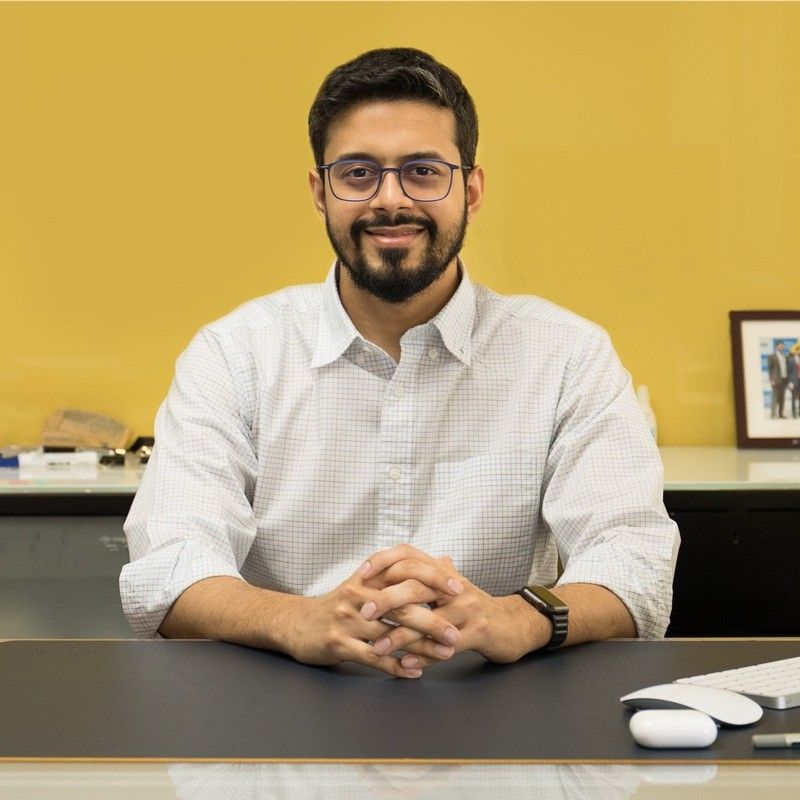
Gautam Saraogi, Founder & CEO, Go Colors reflects on this journey and the road ahead: “From a 65 sq ft kiosk in 2011 to a 3000+ sq ft flagship in 2026… we are entering a new phase of growth.”
Retail First, Digital Later
In contrast to the industry’s push toward omnichannel scale, Go Colors has built its business around ownership of physical retail. The EBO-led model—contributing nearly 75–80% of revenues—gives the brand end-to-end control over pricing, merchandising and customer experience. This has enabled it to maintain consistently high sell-throughs without relying on deep discounting, supporting both margins and brand equity.
Online, in comparison, plays a focused supporting role—enhancing accessibility and assortment visibility, while deliberately avoiding the margin pressures associated with marketplace-led discounting.
Retail & Financial Snapshot
| Metric | FY25 (Actual) | FY26 (Estimated) | Direction |
|---|---|---|---|
| Operating Revenue | ₹848.2 Cr | ₹840–850 Cr | Stable |
| EBITDA Margin | ~31–32% | ~29–30% | Moderation |
| Full-Price Sales | ~95.4% | Sustained | Strong |
| Store Network | 825 EBOs | ~840–850 EBOs | Expansion |
| Net Store Additions | 62 | 60–70 | Calibrated |
| Online Contribution | ~4–5% | Controlled | Strategic |
| EBO Contribution | ~75–80% | Core driver | Strong |
Calibrated Expansion with Cluster Discipline
Having built scale, the company is now shifting toward quality-led expansion. Annual store additions have been moderated to around 60–70, reflecting a more disciplined approach that prioritises store-level profitability, sharper selection of high-potential micro-markets, and stronger demand visibility.
Growth continues to be driven by Tier 2 and Tier 3 cities, particularly across North and East India, where the opportunity for organised fashion retail remains significant. At the same time, the brand’s cluster-based strategy—deepening presence within cities—helps optimise supply chain efficiencies while strengthening local brand recall and operating leverage.
From Small Stores to Flagship Destinations
A visible shift in strategy is the move toward larger, experience-led retail formats.
While early expansion was driven by compact, high-efficiency stores, the company is now investing in 3,000–4,200 sq. ft. flagship formats, consolidating smaller units and enhancing in-store merchandising. The recent flagship launch in Kochi—its first in Kerala—illustrates this transition toward more immersive retail environments that support broader category display and higher engagement.
Product Expansion Driving Retail Evolution
The evolution of store formats is closely aligned with changes in the product mix.
While bottomwear remains core, the company has steadily increased the share of value-added bottomwear to ~65% of sales, alongside expanding into women’s topwear under its “Daily Wear” concept, and piloting menswear and girlswear categories.
With a portfolio of 2,000+ SKUs, Go Colors is transitioning from a category specialist to a more comprehensive wardrobe platform—requiring deeper assortment visibility and stronger in-store storytelling.
Global Expansion: Extending the Retail Playbook
Go Colors has also begun taking its retail model international.
Through a franchise partnership with Apparel Group, the brand entered the Middle East with its first store in Dubai’s Silicon Central Mall, with plans to expand to ~13 stores across the UAE and Saudi Arabia.
This move reflects confidence in the scalability of its EBO-led model and the broader appeal of its fit-led, essentials-driven positioning.
Operational Discipline Remains Core
Even as it evolves, Go Colors continues to operate with strong backend discipline.
Inventory levels, which saw some build-up during the year, are being actively optimised toward a ~100-day cycle, ensuring freshness without heavy end-of-season discounting. The company’s fully outsourced manufacturing model and focused capital allocation toward retail and supply chain systems continue to support efficient scaling.
A Strategic Transition Underway
What is unfolding is a measured shift in growth strategy.
The company is moving from rapid expansion to calibrated growth, from category ownership to wardrobe building, and from transactional retail to experience-led formats. Alongside, there is a sharper focus on improving same-store productivity, even as newer formats and categories are being scaled.
This transition reflects a conscious balancing of growth, efficiency and long-term brand positioning.
Driving the Next Phase of Retail Expansion
As it approaches its FY25 results announcement, Go Colors presents a distinctive case in Indian fashion retail—offline-first, margin-led, and tightly controlled.
The next phase will be defined by its ability to deepen category expansion, enhance store productivity and scale its retail model across markets, while maintaining the discipline that has underpinned its success so far.
If executed well, Go Colors could continue to set the benchmark for how focused, retail-led fashion brands scale—first in India, and increasingly, beyond it.