




‘Shaw’, a gaffer and cam OP, on the art of lighting retail brand campaigns—and why the best lighting isn’t about adding more light, but knowing exactly what the image needs to say…
In the world of brand films, a gaffer’s work is often associated with technical equipment. Cables, fixtures, rigging, power distribution, control systems, and all technical aspects that make a lighting setup possible come fall under the scope of work of what a gaffer does, but New York-based Shaurya ‘Shaw’ Chopra is lighting up a different path.
Shaw, who’s lit up many a campaign with his brand of lighting – Nespresso Festive, Kheil’s: Get Skin Smart, Gucci X Tatler, Tiffany & Co. X OBU, Nordstrom Rack Festive, Calvin Klein Internal Denim, Mango and JC Penny to name a few, alongside narrative films and music videos – says the real work begins much earlier than the campaign shoot. “It begins with looking,” he states.
For Shaw, that instinct to look closely was not born on commercial sets; it was shaped much earlier, through photography.
Before thinking about what fixture to bring onto a set, he learned to pay attention to what light was already doing. Moving a subject closer to a window could change the shape of a face. Turning someone slightly in a scene could shift the contrast, and sometimes, simply waiting for the natural light to change could achieve more than introducing another fixture. This very instinct has remained central to his work.
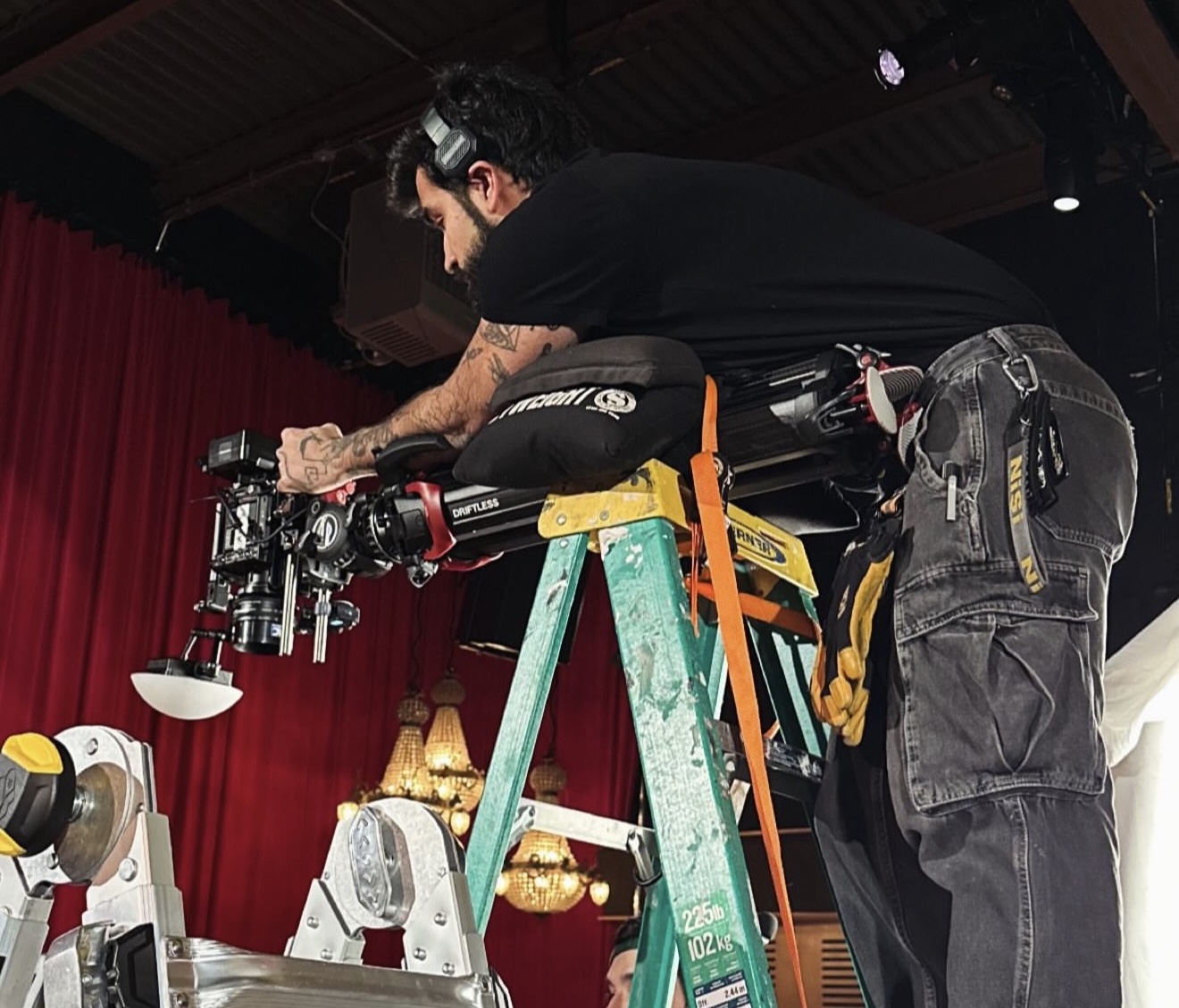
Taking a Brand Campaign from Dull to Lit!
Shaw, who brings his distinctive lighting sensibility to brand campaigns, always starts by considering what the image is trying to communicate before deciding what equipment belongs on a set.
The first step is to understand what the commonly asked questions are – where should the light come from? How large should the source be? What should remain visible, what can disappear, and what’s motivating the light within a scene?
One question has become particularly important to him is – “Do we actually need to see that?” This question may seem deceptively simple, with critics arguing that every element of a brand’s campaign must be visible, but drawing from his photography days Shaw has learnt that the objective isn’t always to recreate a lighting diagram, but to understand the qualities that made a reference image work in the first place. Simply put – is it always possible to recreate a reference set up look at the actual campaign location?
Shaw breaks this down further. “A reference for a scene might have been created with a huge source pushed through diffusion. Meanwhile, the actual production may have a different location, limited power, a tighter schedule or a completely different camera movement. Trying to reproduce the original setup literally may therefore make little sense,” he says.
For aspiring lighting experts, he says the right thing to do is to break the image down. “I typically look at the direction of the source, its size, softness, and falloff, and even study the shadow side of a face and the separation between the subject and the background. I then consider how colours can affect the frame’s emotional quality and, most importantly, where the audience is meant to look,” he explains.
Only after understanding these elements does he move on to fixtures.
Do We Actually Need To See That?
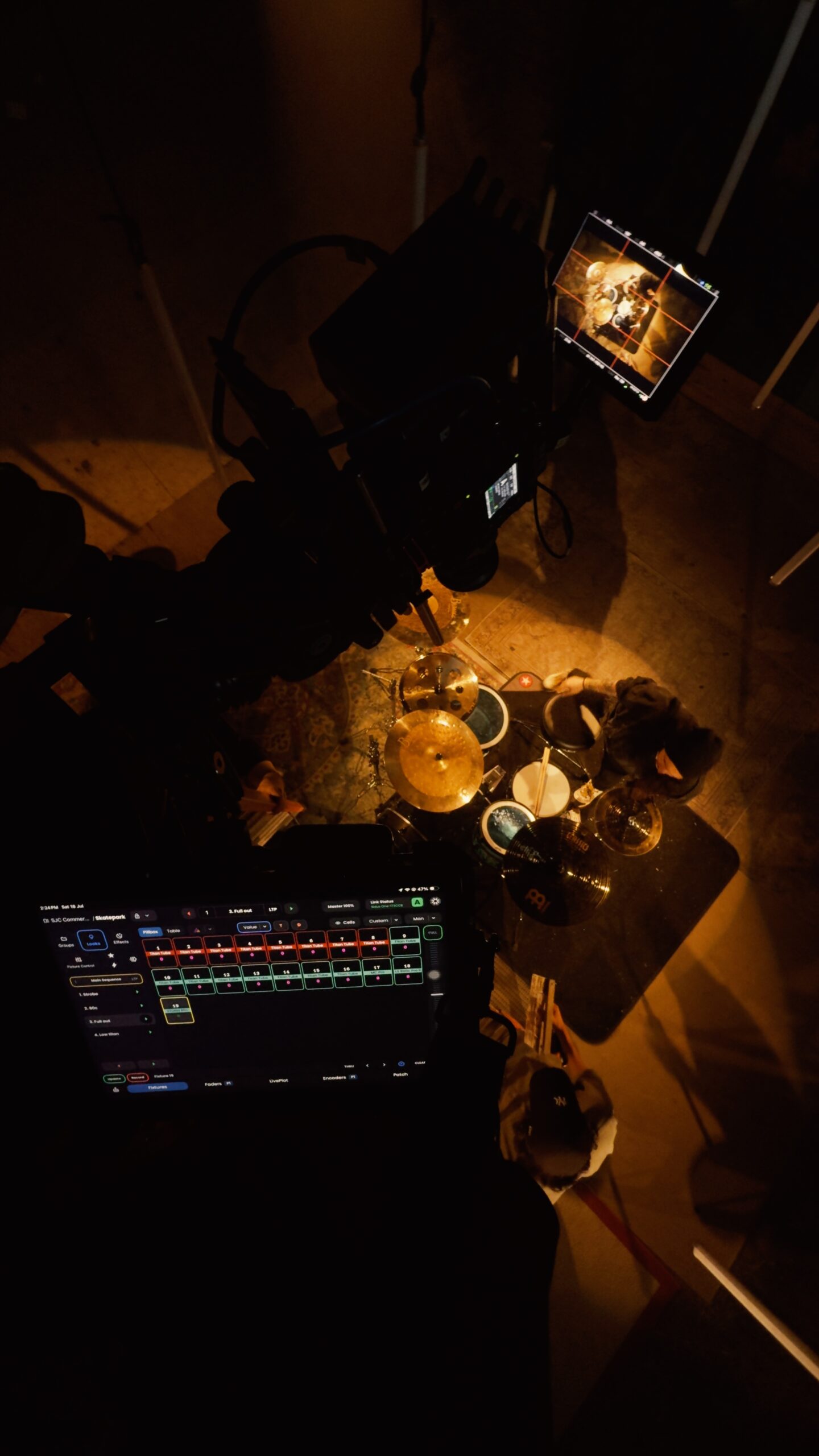 A Director of Photography once jokingly said about Shaw that he sometimes seems happier turning lights off than turning them on. Even as the group cracked up, they all seemed to realise a deeper meaning in the quip – that in several ways, restraint has become part of Shaw’s visual personality.
A crucial shift in Shaw’s development as a lighting professional has been becoming comfortable with not showing everything and this restraint has followed him as his career graph moved upwards, across different kinds of productions.
Photography initially encouraged him to reveal more, to show a face clearly, or include elements in the background because it felt natural to ensure the audience could see it. Campaign shooting and filmmaking, however, gradually challenged that instinct. Shaw learnt that sometimes, darkness can carry more meaning than illumination, a face can lose some of its detail and become more mysterious, a background can fall away, allowing the viewer to focus entirely on the subject and a silhouette can remain a silhouette, rather than being filled in simply because the technology allows for it.
For Shaw, this was the point where he saw everything clearly – the point when he understood that lighting is less about making an image conventionally beautiful and more about deciding what the audience should experience. “What is the image asking for?” became a creative question rather than a technical one.
Visual Decision Making Over Technology
Shaw’s way of thinking continues to shape how he approaches the tools themselves. For him, technology may have evolved, but the fundamental act of lighting remains one of visual decision-making. “Lighting is often about refinement rather than reinvention, for example, a large fixture placed in the wrong position can still produce the wrong image. Conversely, a small practical light in exactly the right place can become the defining element of a frame,” he says.
Apart from this, Shaw also focuses on protecting the image’s intention rather than following a fixed setup because lighting plans often can change due to weather, blocking, time, or equipment. In short, he works to translate a cinematographer’s references or emotions into practical solutions while encouraging collaboration.
On retail brand campaigns, that practical problem-solving becomes particularly important. By adjusting diffusion, bounce, negative fill, sources or positioning, he adapts to the demands of the set while keeping the creative vision intact. That ability to find a solution without losing sight of the larger visual idea is a recurring part of the work he enjoys.
By adjusting diffusion, bounce, negative fill, sources or positioning, he adapts while keeping the creative vision intact. That practical problem-solving is a recurring part of the work he enjoys. Some of his favourite moments on set begin with a deceptively simple question: “How the hell are we going to do this?” The answer often emerges through a conversation between the DP, gaffer and crew rather than from one person having the perfect solution immediately.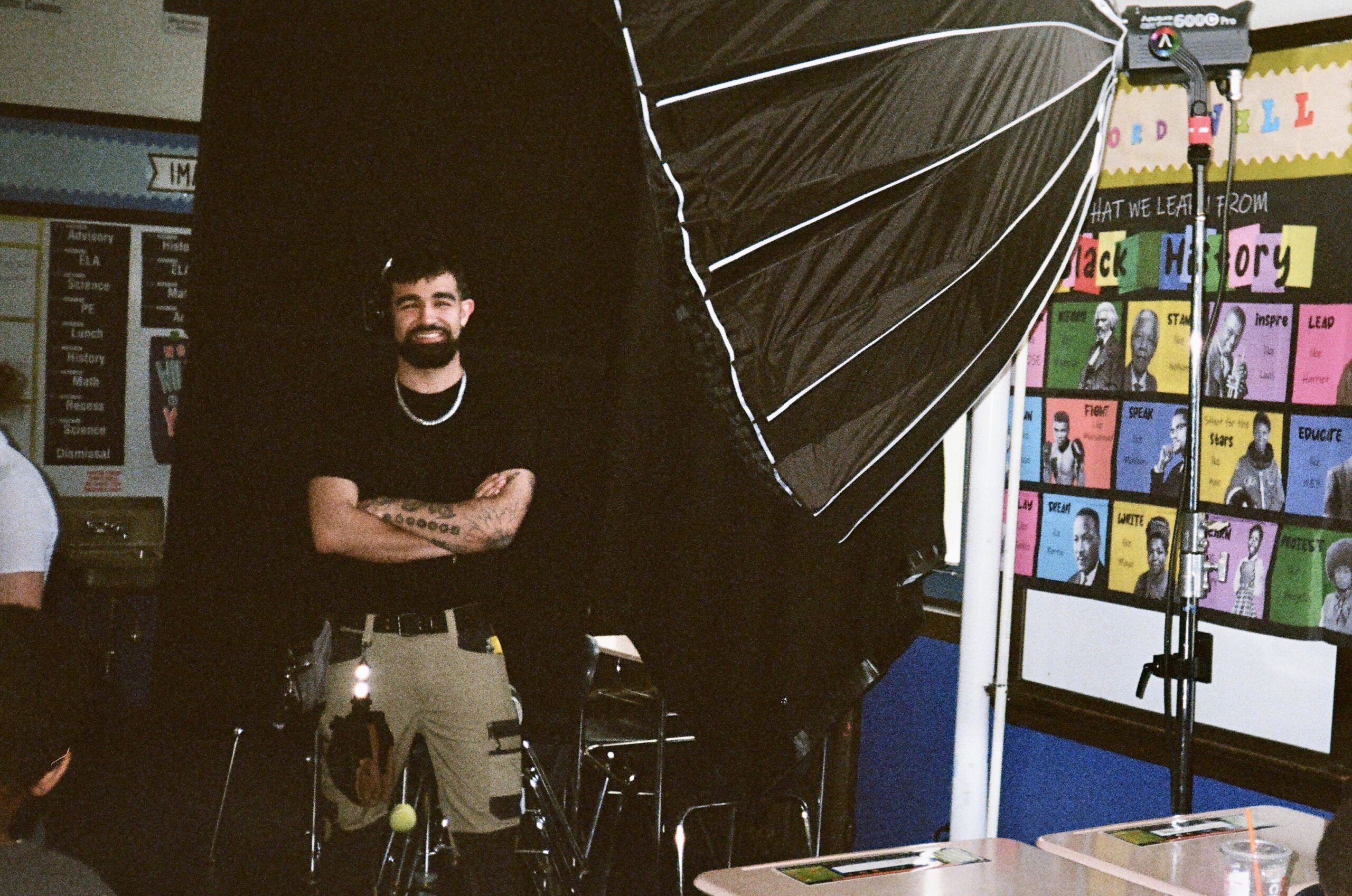
Each field that Shaw has worked in has taught him something new. While music videos gave him room to experiment, commercials gave him precision and narratives taught him motivation and storytelling. Ultimately, for Shaw, the craft lies in acknowledging that there is no one single correct set up but in a balance of knowing what the technology can do, and more importantly, understanding what the frame needs, adapting quickly and knowing when not to add another light. As he succinctly puts it, “Knowing how to turn on a light is technical knowledge. Knowing when to leave it off is taste.”