





Premium performance brand Under Armour has been steadily growing its presence in India since entering the market in 2019, operating exclusively through Underdog Athletics Pvt. Ltd.
Today, the brand is evolving beyond its performance-first roots to position itself as a cultural force that sits at the intersection of fitness and lifestyle. As India’s fitness culture evolves and younger consumers seek performance-driven yet versatile apparel and footwear, Under Armour is expanding its relevance beyond the field: in 2025, the brand marked its entry into the street style sneaker aesthetics with the launch of UA Echo.
Now, with a clear focus on offline retail, premium positioning, and performance led innovation, Under Armour is charting a long-term growth path in the country. The brand currently operates 49 stores across 30 cities.
In an exclusive conversation with IMAGES Business of Fashion, Tushar Goculdas, Managing Director, Underdog Athletics Pvt. Ltd., shares insights into Under Armour’s retail strategy, evolving store concepts, product diversification and focus, and expansion roadmap.
Under Armour has been expanding its physical footprint with reimagined brand houses. What’s driving this focus on offline retail when many brands are going digital-first?
When we started setting up Under Armour in India back in 2018, we had a very clear vision: to become the most loved premium athletic performance brand in the country. We launched in March 2019, and it’s now been a little over six years.
From day one, our strategy was to build brand love and brand desire to drive sustainable growth. One of the most important levers for this was creating impactful, inspiring retail stores in top locations across the country.
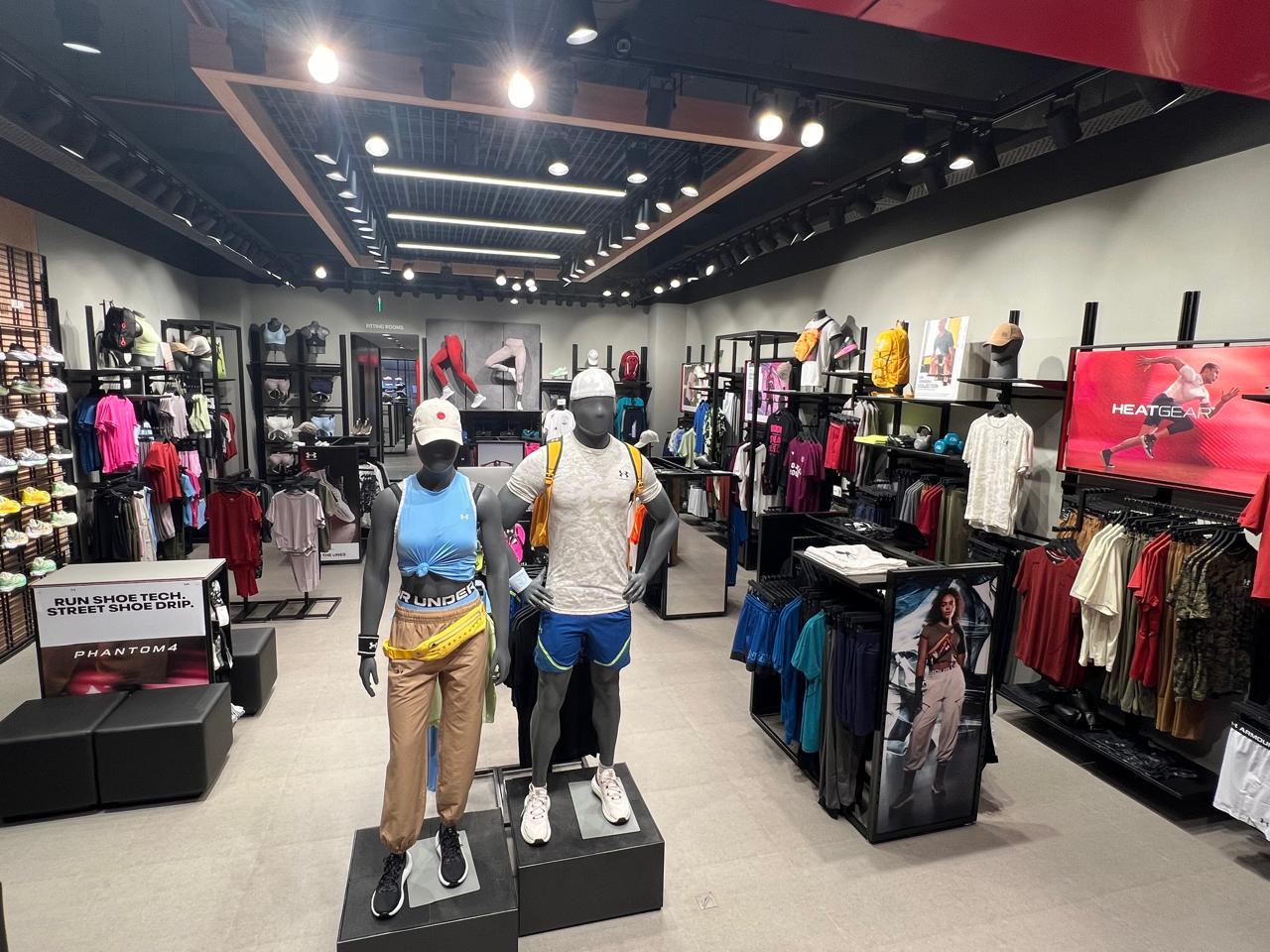
We opened first store in 2019 and today we are at nearly 50 stores. The stores are largely located in top shopping malls and selected high streets, always with the right adjacency – typically alongside brands like Armani Exchange, Tommy Hilfiger and Calvin Klein. In malls, we are almost always on the ground floor, which reinforces our premium positioning.
From the beginning, we were very clear about how we wanted the brand to be perceived: athletic performance, innovation and premium. Our product focus reflects our performance heritage, with strong technology and innovation delivering real value to consumers.
Pricing has been equally important. We have always priced in line with global pricing and have never discounted the brand in our brand house stores. Over six years, we’ve sold at full price. Any leftover or old inventory is cleared only through factory outlets. Going forward, we do not plan to discount in our brand houses.
In terms of expansion, we planned for 8–10 stores a year, and we’ve stayed consistent with that. Looking ahead three to five years, we expect to continue at the same pace, driven largely by the availability of premium retail real estate and new mall openings.
As for digital—e-commerce does have a role in terms of reach and convenience. But given the nature of our product, a physical, tangible experience is critical. You can’t replicate the feel of a garment or the comfort of footwear digitally.
Once a consumer becomes familiar with the brand, they may reorder online for convenience. But trust, loyalty and long-term relationships are built through physical engagement.
Marketplace-led e-commerce can also be commoditising, which is not what we want. That’s why our focus remains firmly on direct-to-consumer channels.
You’re also investing in re–imagined store concepts. How are these next-generation formats different?
Our current format is called the ‘Brand House City Concept’. Compared to our earlier global concept, this format allows for a much stronger footwear presentation, especially through the footwear wall.
It also enables us to showcase a wider assortment in the same physical space. For example, after renovating our Ambience Mall store in June, we saw high double-digit growth in the same footprint simply because we could present more products and give consumers more choice.
The fixtures and furniture are sleeker, improving visibility and storytelling. Storytelling has already improved significantly, and in the next iteration, likely in 2H26, we will add more digital elements to make it even more effective.
Under Armour has always been performance-first. What led to a more deliberate move into sportswear and street style, like UA Echo?
(Speaking for India) At the core, Under Armour will always be a brand for athletes and fitness enthusiasts, and that will not change. The brand was founded on performance innovation— as Founder Kevin Plank introduced moisture-wicking apparel back in 1996, and innovation has been central for nearly 30 years.
However, the same athlete who wears Under Armour on the field also loves the brand and wants to wear it beyond sport. That’s where product extension comes in.
With UA Echo, we’ve taken our footwear technology like comfort, cushioning and performance, and added a streetwear aesthetic. The result is a versatile product that works both on and off the court.
How does the sneaker line connect with Gen Z while retaining the brand’s performance DNA?
Performance-first DNA remains non-negotiable. The technology and functional benefits are paramount. What changes is the styling and versatility, which allows the product to be worn across more occasions.
UA Echo, for example, was not intended as a running shoe, yet consumers have shared that they comfortably run in it because of its cushioning. It doesn’t take away from performance; it simply adds a cooler, streetwear aesthetic.
What marketing and storytelling strategies are you using to build brand visibility in India?
Retail is one of our strongest marketing levers. Great store locations and in-store experiences are where the consumer truly encounters the brand. Once someone wears an Under Armour product for the first time, their perception changes completely.
Even a plain white T-shirt, for example, may not look special visually, but it could be made with Iso-Chill technology, delivering a cooling effect on the skin. That experience can only happen in-store.
Beyond retail, having the right athletes and fitness enthusiasts represent the brand is critical. The real impact comes when these ambassadors are integrated into strong storytelling that connects with consumers.
In short, our approach is simple: great stores, great in-store experience, and engaging storytelling that drives consumers to either visit a store or explore our website.
How important is localisation for Under Armour in India?
A significant share of our consumers, especially in metros, are people who have experienced the brand internationally. They want exactly the same global product in India, and that’s very important to maintain.
Localization, therefore, is more about storytelling and community building. We work with Indian athletes and fitness communities, running groups, fitness collectives and micro-communities that are relevant locally. The dynamics of sports and fitness differ by market, and that’s where localization plays a key role. Product-wise, however, we remain completely global.
What are your expansion plans?
We are present across north, west and south India, but we have limited presence in the east. Last year, we opened in Bhubaneswar, and over the next 12–18 months, we will expand further into eastern markets including Kolkata, Visakhapatnam, Patna, and select northeast cities.
At the same time, we will continue adding stores in existing markets like Delhi, Mumbai, Bengaluru, Gujarat and Maharashtra where strong opportunities arise.
In Q1 FY26 (Jan–March 2026), we will open about six stores, which is higher than usual due to timing of availability. Otherwise, we will continue opening 8–10 stores annually. In two years, we expect to reach around 70 stores, and in five years, close to 100 stores.
What does the brand’s roadmap for 2026 look like?
A major focus will be on new store launches, with strong marketing activations around each opening, followed by sustained engagement over the first three to six months.
From a product standpoint, running will be a key focus in 2026, with several exciting launches in January and February that will position us at the top end of the category globally.
We will also expand the UA Echo franchise and introduce another new footwear franchise later in 2026 called Halo, which blends high performance with street appeal.
Additionally, women’s has been growing faster than our average growth rate, and we will continue to invest heavily in women’s products — particularly in styling, cuts and fits, while maintaining high performance standards.
Can you share Under Armour India’s financial performance and growth outlook?
Over the last three years, we’ve grown at a CAGR of 25%. For the year ended March 2025, we reached Rs 500 crore in MRP value (consumer price value).
Over the next two to three years, we expect to grow at a 20–25% CAGR, supported by store expansion and continued growth in e-commerce.
Lastly, how do you see Under Armour’s role evolving in India?
At its core, Under Armour will always be a performance brand, delivering everything an athlete needs. But there is also tremendous scope to become a cultural force, expanding influence through newer products and wider storytelling, while staying firmly rooted in performance.