


In a market often dictated by fleeting hype and restrictive seasonal cycles, The Indian Garage Co. (TIGC) has emerged as a disruptive force, weaving together a diverse brand universe that appeals directly to the everyday Indian shopper.
Whether it’s a global design drop or a content strategy built for the always-scrolling consumer, The Indian Garage Co. has emerged as one of India’s most culturally fluent fashion brands — not just selling clothes, but democratising consumer choice.
For Founder & CEO Anant Tanted, the journey from selling private-label garments in his college days to leading a brand nearing a Rs 500 crore GMV has been guided by two core insights: “Customers care deeply about quality” and once that trust is established, “the brand label becomes far less important.”
This simple, powerful conviction shaped TIGC’s revolutionary core philosophy: premium, trend-forward fashion without the ‘brand tax.’
The Pivot: Shutting Down Offline to Go Online-Only
TIGC was founded in 2011-12, focusing initially on the burgeoning value denim segment. Tanted’s background in manufacturing for national brands gave him a critical understanding of sourcing and quality.
At a time when D2C was still finding its feet, Tanted founded TIGC with only the consumer in mind. He used his knowledge to build a brand that offered branded quality without the branded premium.
The initial strategy was traditional: offline retail across eight territories, selling through Multi-Brand Outlets (MBOs). However, by 2016, Tanted realised this model was a barrier to building a true, customer-centric brand. “The retailer was the gatekeeper, and our passion for the product wasn’t directly reaching the customer,” Tanted reflects.
The pivotal decision: TIGC shut down its entire offline operation and went online-only. This radical pivot established the direct-to-consumer (D2C) DNA that defines the brand today.
Another key moment came in 2020: despite the uncertainty of the COVID-19 pandemic, TIGC chose to keep production going while others scaled back, a conviction that paid off when the market recovered.
Today, TIGC is strategically reversing its first pivot, making major investments in both scaling its own D2C portal, TIGC.in (which saw 8x revenue growth during Black Friday), and opening a growing network of Exclusive Brand Outlets (EBOs).
Eliminating the ‘Brand Tax’ Through Vertical Integration
 The brand tax – the premium consumers pay due to multiple middlemen and distributors – is TIGC’s structural target.
Tanted believes the Indian consumer is one of the sharpest in the world, valuing quality and relevance over hype. “TIGC’s entire thesis was based on this – quality has to be brand, fashion has to be fast, and it has to reach the consumer directly. Because if somebody is filtering the fashion for the customer, they don’t have the democratic selection process and that completely undermines our existence.”
Another focus for Tanted was giving India the same trends that the world is wearing, not six months later but in real time. “We don’t believe in seasons. We track the consumer’s mood every day,” says Tanted.
To execute this, TIGC built an end-to-end system: designing, sampling, sourcing, production, warehousing, and delivery are all controlled internally. “And with the evolution of AI, we can now sense demand, predict how far a trend will go, and ensure we neither miss opportunity nor fall short on inventory.”
This structure allows TIGC to be fast, flexible, and offer high-quality fashion at accessible prices, making the philosophy of ‘premium fashion without the brand tax’ a fundamental business strategy, not just a marketing tagline.
The Power of Breadth: Solution-Based Sub-Brands
TIGC launches new styles almost every day, with a catalog of approximately 10,000 options. Crucially, the brand has avoided being boxed into a single aesthetic (like only denim or only T-shirts) by creating multiple solution-based sub-brands:
- Indian Garage Celeb: High-fashion, Page-3 inspired partywear.
- Resort: Lifestyle-driven looks for all travel types (beach, mountains, hike).
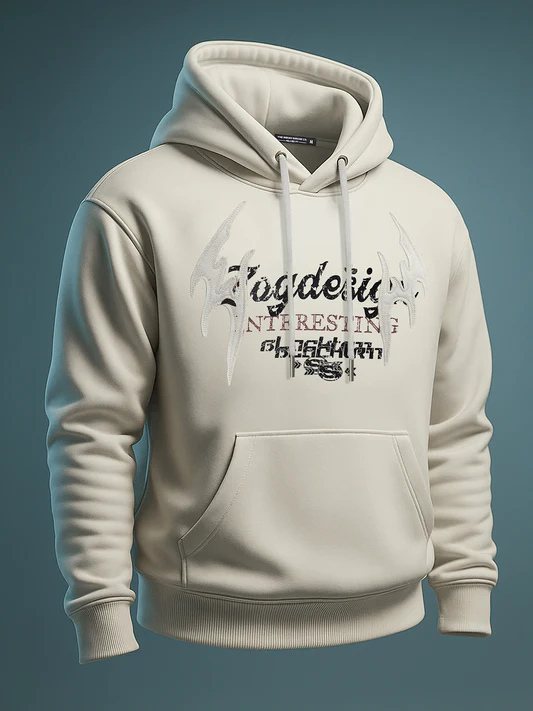
- Street: Makes up 8–10% of the business; Commercially viable, wearable high-end streetwear.
- LUXE: Modern, fashion-forward formal clothing for young professionals; high in demand in tier 2 and tier 3 markets
- Core Casual: The everyday essentials (denims, shirts, T-shirts).
The brand has multiple drops within each look. One of its most successful campaigns recently was the Artistry of Polo, an ‘old money’ themed collection. That single campaign is currently trending at Rs 15–20 crore in revenue.
In streetwear, the brand recently launched the Outlawed collection. In jackets, it has introduced PU jackets. “We’re able to catch consumer sentiment early and curate drops quickly,” Tanted says.
Notably, TIGC is not a single-category or stereotype-driven brand. Unlike brands that become known only for T-shirts or only for denims, he says, TIGC operates with an industry-standard contribution mix: roughly 35% shirts, 15–20% denims, 15–20% knitwear, 15–20% winterwear, and so on.
“We essentially offer everything a consumer needs in their wardrobe – from boxers to windcheaters to winter jackets. That breadth is our strength, and it reflects the share of wardrobe we now hold with our customers,” he emphasises.
Democratising Streetwear: The Anti-Hype Model
While streetwear makes up 8-10% of TIGC’s portfolio, the brand approaches this hype-driven category with its signature anti-establishment ethos. Tanted views the practice of high-priced competitors charging Rs 4,999 or more for streetwear T-shirts as a “disrespect to the consumer who built the brand.”
TIGC aims to build the culture but refuses to overcharge for it. The brand continues to offer refreshing, globally-aligned collections targeting specific communities like bikers, gamers, and artists.
“Our focus is on making streetwear more commercially viable and approachable. The product, design, handwriting, and quality will match the best in the category, but we won’t make it unreachable,” Tanted opines.
Strategic Offline and International Expansion
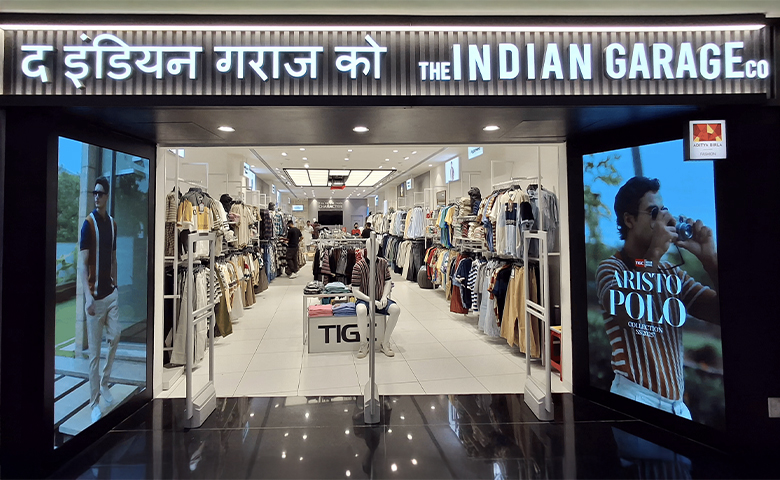
While its online journey is robust, the brand is embarking on an ambitious retail expansion. In the last year, TIGC has opened about nine EBOs, and is on track to open another 14 in the next 3 months. The brand has also set a target to reach 100 EBOs in the next two years.
The rollout is heavily data-backed, says Tanted. “Our top states today are Maharashtra, Andhra Pradesh, and Karnataka. You’ll see that reflected in our store footprint – two stores in Pune, two in Bengaluru, two in Hyderabad. It’s a very organized, strategic rollout.”
Simultaneously, TIGC is expanding its global footprint. The brand is already present in the GCC markets (Dubai, Saudi Arabia, Kuwait) with plans to enter the USA soon.
Based on the positive response it has seen online in the GCC region, TIGC is now strategically planning its offline expansion, with the initial step to pilot a few physical stores in the region.
“This move aligns with the brand’s larger and often-reiterated goal: to become a global selling powerhouse from India. Our vision is to create a brand that is predominantly Made in India (80-85% of sourcing) but also strategically sources materials globally, enabling us to significantly increase our global sales,” Tanted shares.
He adds, “The brand name The Indian Garage Company itself carries an Indian identity, which we believe will be a powerful asset when listed in the Gulf countries and other international markets. It is our dream and vision to have this brand present across the globe, establishing it as a truly Indian brand that is a global selling powerhouse.”
The Multi-Pronged Growth Engine
TIGC is currently operating close to the Rs 500 crore GMV mark, with a target to reach Rs 800 crore GMV in the next year. Over a three-year horizon – starting 2024 – our goal was to touch Rs 1,000 crore. “We’re on track to achieve that figure within the next two years,” says Tanted. “Today, we’re present across every platform where our consumers expect us to be, and that positions us well for the next big leap. What will help us get there is the consistency we’ve maintained from day one, across product, fashion, delivery, and quality.”
Looking ahead, TIGC’s plan for the next two years is as follows (all GMV numbers):
- D2C should reach close to Rs 300 crore
- Retail should scale to around Rs 150–200 crore
- Marketplace should reach approximately Rs 750–800 crore
Storytelling for a Community
Two years ago, TIGC’s Instagram following was just 6,000 despite serving 5 lakh new customers monthly. Recognising the disconnect, the brand shifted from performance-marketing-driven posts to a community-led approach.
By focusing on engaging content – behind-the-scenes looks at the design process, warehouse, and office life – TIGC organically scaled its following to 200,000 in 15 months, achieving an engagement rate 5x the industry average.
“We want the consumer to be part of our everyday life, and not just scroll through generic fashion reels. We listen, we learn, and we create content that truly resonates,” Tanted adds.
For him, these activities are long-term brand-building levers and are intentionally separated from performance marketing, which is primarily geared towards driving immediate sales. “Our social media strategy therefore operates independently from performance marketing, as each serves different objectives in the consumer journey.”
This commitment to authenticity is encapsulated in the recent campaign with cricketer Suryakumar Yadav, ‘Freestyle It.’ The core message is one of empowerment: “Don’t worry about the noise, just freestyle it. You are the main character.” Just as Surya is the ‘Mr. 360’ of cricket, TIGC positions itself as the 360-degree fashion brand that backs the consumer’s individual choices.
“The idea is to encourage individuality, break away from restrictive narratives, and let people enjoy their fashion journey with us while shutting out all the unnecessary noise. That’s the core of the Freestyle It campaign,” Tanted concludes.